


Why is CT PT called an instrument transformer?
2025-04-17
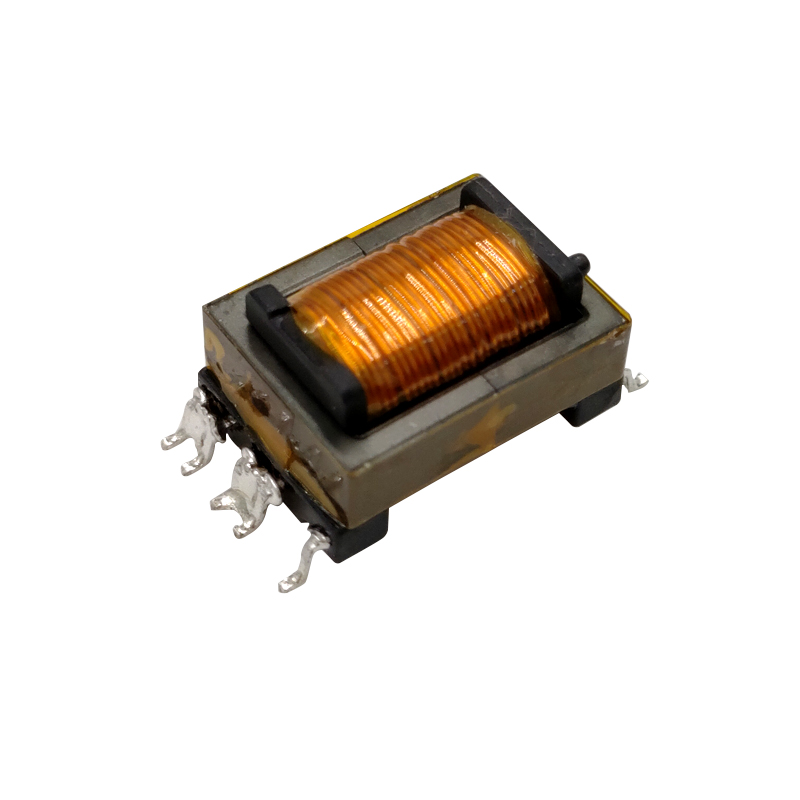
In the intricate landscape of electrical engineering, terms like CT (Current Transformer) and PT (Potential Transformer, also known as Voltage Transformer) frequently surface.
ut what lies behind their collective designation as instrument transformers? Let's embark on a detailed exploration.
Decoding the Fundamentals of CT and PT
A current transformer serves the crucial function of reducing high currents within a power system to a more tractable magnitude. It is composed of a primary winding, which is connected in series with the high - current circuit, and a secondary winding. The 匝数 ratio (turns ratio) between the primary and secondary windings is meticulously engineered to achieve the desired current transformation ratio. For example, in a scenario where the primary current registers at 1000 A and the transformation ratio is set at 1000:5, the secondary current will be precisely 5 A. This lower secondary current can then be safely and accurately measured using ammeters, power meters, or be utilized for protection relays.
Conversely, a potential transformer is designed to step down high voltages. The primary winding of a PT is connected across the high - voltage circuit, while the secondary winding supplies a reduced - voltage output. This enables the safe measurement of high voltages using voltmeters, watt - hour meters, and other voltage - sensitive instruments. Consider a high - voltage line operating at 110 kV. Through the PT, this voltage can be stepped down to a much more manageable 110 V or 120 V on the secondary side, making it suitable for standard measuring instruments.
The Inseparable Bond with Instruments
The primary reason CTs and PTs bear the name instrument transformers lies in their intimate connection and utilization in tandem with measuring and protective instruments within an electrical power system.
Measuring Instruments
- Ammeters and Voltmeters: CTs are instrumental in facilitating the accurate measurement of high currents. By furnishing a proportional, reduced - current signal to ammeters, they enable precise current readings. Similarly, PTs supply a scaled - down voltage to voltmeters, allowing for the measurement of high - voltage values that would otherwise pose a significant risk or be technologically unfeasible to measure directly.
- Power and Energy Meters: These meters rely on the accurate measurement of both current and voltage to compute power consumption or generation. CTs and PTs play a pivotal role by supplying the appropriate current and voltage signals to power and energy meters. This ensures accurate billing for consumers and efficient power management for utilities.
Protective Instruments
- Relays: In the realm of power system protection, relays are of paramount importance in detecting faults and abnormal conditions. CTs and PTs provide the essential current and voltage inputs to protective relays. For instance, over - current relays utilize the current signal from CTs to trip circuit breakers when the current surpasses a pre - set threshold. This safeguard protects the system from potential damage caused by excessive current flow. Voltage - sensitive relays, which depend on PTs, can detect under - voltage or over - voltage situations and initiate corrective actions to maintain the stability of the power system.
Indispensable Role in Power Systems
Instrument transformers are irreplaceable components within power systems for several compelling reasons:
- Safety: By stepping down high currents and voltages, CTs and PTs act as a shield, protecting not only the measuring and protective instruments but also the personnel operating them. High - voltage and high - current values can be extremely hazardous, and these transformers mitigate the associated risks, creating a safer working environment.
- Accuracy: They ensure the accurate measurement of electrical parameters. Precise current and voltage measurements are essential for various aspects of power system operation, including load monitoring, energy accounting, and grid stability analysis. Without the accurate transformation of high values to measurable levels by CTs and PTs, the reliability of these operations would be severely compromised.
- Compatibility: CTs and PTs bridge the gap between high - voltage/high - current power systems and standard - rated measuring and protective instruments. They enable the seamless integration of these instruments into the power system infrastructure, allowing for effective monitoring, control, and protection of the grid.