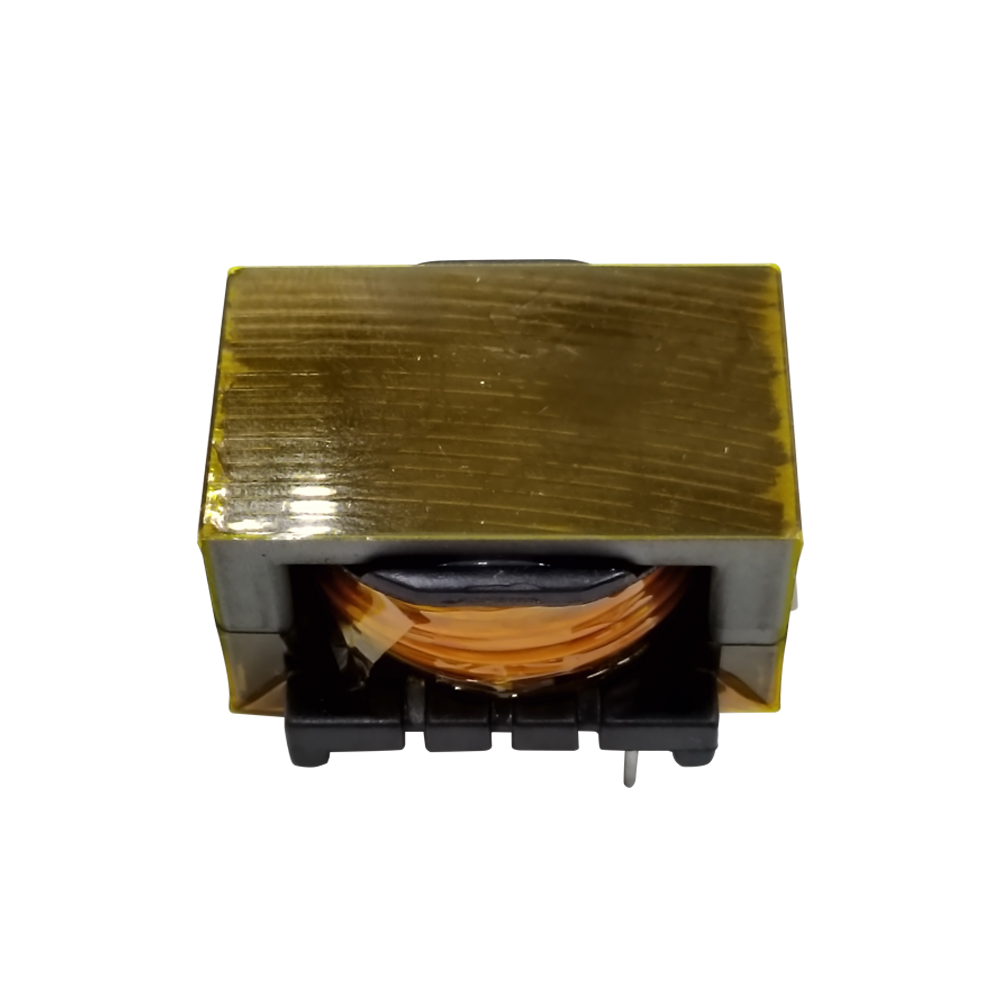
Why are toroidal transformers more efficient?
Why Are Toroidal Transformers More Efficient? A Complete Guide If you’ve ever shopped for transformers for audio systems, medical devices, or renewable energy setups, you’ve probably noticed that toroidal transformers are consistently praised for their efficiency. But what makes these doughnut-shaped devices outperform traditional transformer designs? In this guide, we’ll break down the science behind their superior efficiency, compare them to other types, and explore why they’re the top choice for energy-sensitive applications.
What Are Toroidal Transformers, Anyway? First, let’s clarify the basics. A toroidal transformer gets its name from its toroid (doughnut-like) core, which is typically made from tightly wound strips of high-quality cold-rolled silicon steel or permalloy . Unlike the more common E-type (EI-core) transformers with their stacked, rectangular laminations, toroidal transformers feature a continuous, closed-loop core design. Wrapped around this core are concentric primary and secondary windings—copper wires that transfer electrical energy through electromagnetic induction, the same fundamental principle that powers all transformers . But it’s the *structure* of the toroidal design that sets it apart when it comes to efficiency. ## 3 Key Reasons Toroidal Transformers Are More Efficient Efficiency in transformers boils down to minimizing energy loss—specifically, core losses (hysteresis and eddy current losses) and copper losses (resistance in windings).
Toroidal transformers excel at reducing both, thanks to three critical design advantages:
1. Continuous Core Design Eliminates Energy-Wasting Air Gaps The biggest efficiency booster is the toroidal core itself. Unlike EI-core transformers, which have inevitable air gaps where the “E” and “I” laminations meet, toroidal cores are a single, continuous loop . Air gaps increase magnetic resistance (magnetoresistance), forcing the transformer to use more energy to maintain the same magnetic field. By eliminating these gaps, toroidal transformers create a seamless magnetic circuit that minimizes hysteresis loss—the energy wasted as the core’s magnetic poles reverse with alternating current (AC) . Additionally, the core’s circular shape aligns the grain of the silicon steel with the magnetic field, optimizing permeability (the material’s ability to conduct magnetic flux) . The result? Core losses that are 30-50% lower than those of traditional transformers .
2. Concentric Windings Reduce Copper Loss and Leakage Flux Toroidal transformers use a concentric winding method, where the primary and secondary coils are wrapped tightly and uniformly around the entire circumference of the core . This design offers two efficiency benefits: - **Shorter wire length**: The compact, circular core means windings are significantly shorter than those in EI-core transformers of the same power rating. Shorter wire reduces electrical resistance, which in turn cuts down on copper loss (energy wasted as heat in the windings) . - **Superior flux coupling**: The concentric layout ensures the primary and secondary windings are in constant, close contact with the magnetic core. This minimizes leakage flux—magnetic energy that escapes the core without transferring to the secondary winding . For context, toroidal transformers typically have just 1/10 the leakage flux of EI-core transformers , meaning nearly all the magnetic energy is used for useful power transfer.
3. High-Quality Materials Enhance Performance Toroidal transformers rely on premium core materials like grain-oriented silicon steel or permalloy, which have higher saturation flux density and lower hysteresis than the standard laminations used in EI-core transformers . These materials are thinner (reducing eddy current loss, which increases with material thickness) and wound tightly to maximize the core’s stacking factor—the percentage of the core volume occupied by magnetic material (rather than insulation) . A higher stacking factor means better magnetic conductivity and less energy waste.
Toroidal vs. Traditional Transformers: Efficiency Numbers That Matter To put this into perspective, let’s compare toroidal transformers to the most common alternative: EI-core transformers. - **Efficiency ratings**: Toroidal transformers typically reach efficiency levels of 95–99%, with custom designs pushing up to 98% . By contrast, EI-core transformers max out at 65–75% efficiency under full load, and their no-load losses are drastically higher—EI cores can reach 40–55°C when idle, while toroidal cores stay close to room temperature . - **No-load current**: Toroidal transformers draw just 10% of the no-load current required by laminated EI-core transformers . This is a game-changer for devices that stay on standby (like audio equipment or medical monitors), as it slashes standby energy waste. Shell-type transformers, another traditional design, perform better than EI-core models but still fall short of toroids. Their split-core structure creates more leakage flux than the continuous toroidal core, limiting efficiency gains .
Real-World Applications That Benefit From Toroidal Efficiency Toroidal transformers’ efficiency isn’t just a technical win—it translates to tangible benefits in real applications: - **Audio equipment**: High efficiency means less heat and lower electromagnetic interference (EMI), which preserves audio signal clarity . Audiophiles and professional studios swear by toroids for their quiet, clean power delivery. - **Medical devices**: Equipment like MRI machines and patient monitors requires stable, efficient power to ensure accuracy and safety. Toroids’ low leakage flux and minimal heat generation make them ideal for these life-critical tools . - **Renewable energy systems**: Solar inverters and wind turbines rely on transformers to convert DC power to usable AC. Toroidal transformers’ 95%+ efficiency ensures more of the harvested energy is converted to usable electricity, reducing waste in the system . - **Compact electronics**: Their small size (up to 50% smaller than EI-core transformers of the same power) and low weight make toroids perfect for space-constrained devices like copiers, game consoles, and UPS systems .
Why Efficiency Matters (Beyond Saving Energy) The benefits of toroidal efficiency extend far beyond lower electricity bills: - **Longer component life**: Less heat generation reduces wear on the transformer and surrounding electronics, extending the lifespan of the entire device . - **Reduced cooling needs**: Cooler operation means devices require smaller (or no) cooling systems, cutting costs and design complexity . - **Lower EMI**: Confining magnetic flux within the core reduces electromagnetic interference, protecting sensitive components from disruption .
Conclusion: Toroidal Transformers—Efficiency by Design Toroidal transformers aren’t just a “better” option—they’re a smarter design that solves the core (pun intended) problem of energy loss in traditional transformers. Their continuous core eliminates air gaps, concentric windings minimize copper loss and leakage flux, and high-quality materials optimize magnetic performance. The result? Efficiency ratings that reach 99%, lower operating costs, and superior performance for everything from high-end audio to life-saving medical equipment. If you’re working on a project where energy efficiency, compact size, or low noise is a priority, toroidal transformers aren’t just the efficient choice—they’re the logical one.